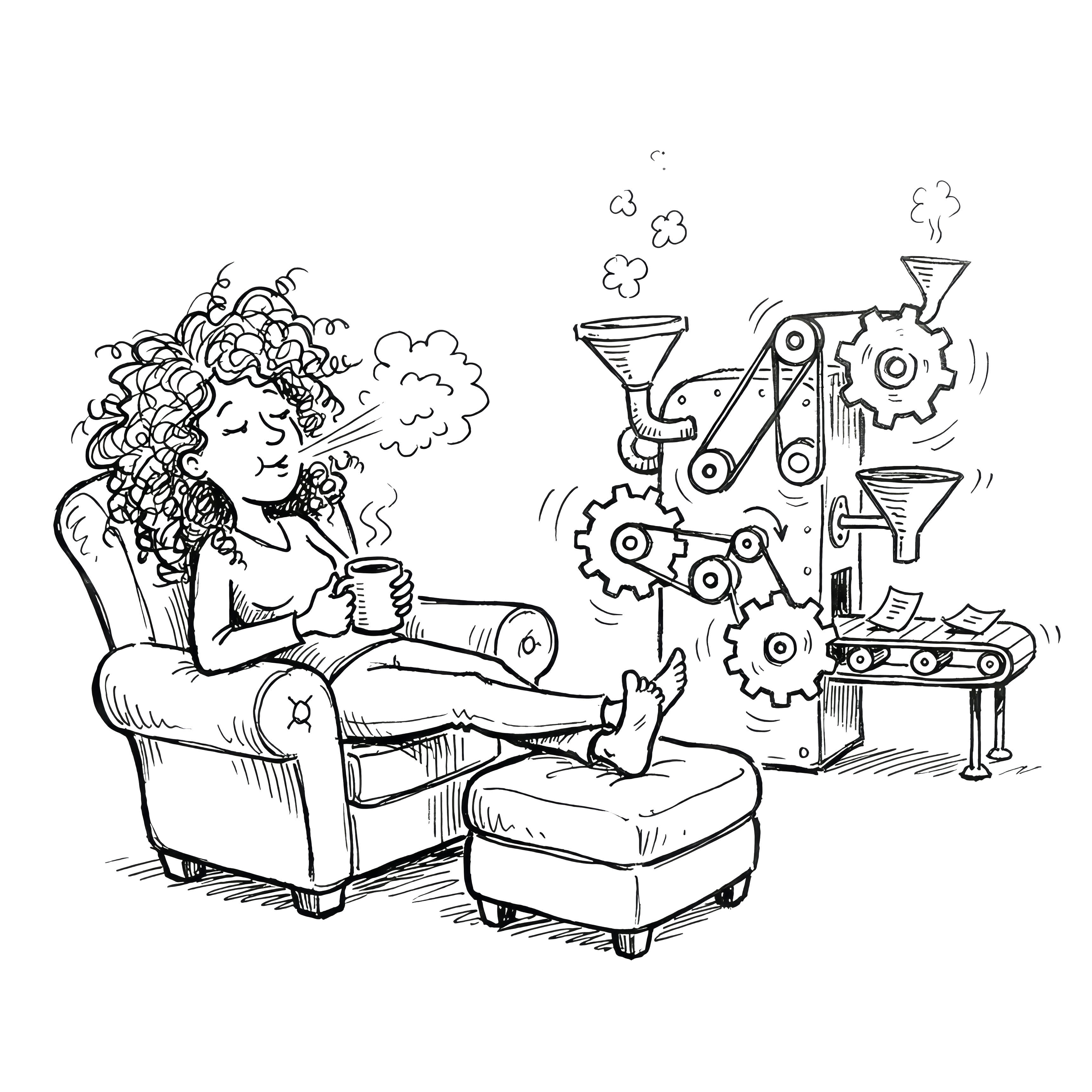
I see the mess.

Then I need to make it make sense.

Where this comes from

It started with Law and Service Management.

I didn't start out building business systems. I started by helping businesses get things done.

I studied Law and later earned a Master of Science in Service Management from the University of Buckingham. Those two things probably explain more about the way I work today than I realised at the time.

Law trained me to question. To look at the facts, find what doesn't add up, follow the chain and understand how one thing affects another.

Service Management taught me to look at a business as more than what it sells. There are people, processes, customers, systems and dozens of small interactions that all have to work together for the business to actually work.

Then I spent years working inside real businesses. And that is where everything came together.

Tomi on an orange sofa with a mug and her laptop, thinking
Hi. That's me.

Full honesty

My brain is a little... interesting.

My brain can have ten tabs open at the same time. I can see the big picture, the tiny detail someone else missed, three possible solutions and the problem we're probably going to have six months from now.

Which sounds wonderful. Until everything is everywhere.

I don't function well in unnecessary chaos. If information is scattered, nobody knows who owns what, I'm supposed to remember something important, and we're relying on "we'll figure it out" as a process... I need to fix it. I need to put everything on the table, understand how the pieces connect and give everything a place.

And strangely enough, something I've had to learn to manage in my own life became one of my greatest strengths in business. My brain looks for patterns.

How my brain works

Tell me you have a lead problem.

"What happens after the lead comes in?"

"Who responds? How quickly?"

"Where is it recorded? Who follows up?"

"What happens after they say yes? Who needs to know?"

"What happens if that person forgets?"

"When do you invoice? Who checks that you got paid?"

And suddenly the thing that looked like a "lead problem" isn't really a lead problem at all. I follow the flow until I find where it breaks.

And once it's fixed, the work moves like this

Flow.

Maybe that's you

I've seen what happens when a business outgrows the way it was built.

I've worked with businesses across marketing, websites, client experience, technology, team management and operations. Different businesses. Different industries. Different problems. But I've seen a pattern.

A lot of good businesses are being held together by very capable, very tired people.

You built something that worked. In the beginning, you could remember every client. You knew every job. You answered the messages. You followed up on the leads. You knew what your team was doing because the team was small enough to ask.

Then the business grew. Now there are more clients. More people. More messages. More tools. More decisions. More things that apparently only you know how to do.

Tomi at a counter with notebooks and highlighters laid out

Everything on the table. Then everything gets a place.

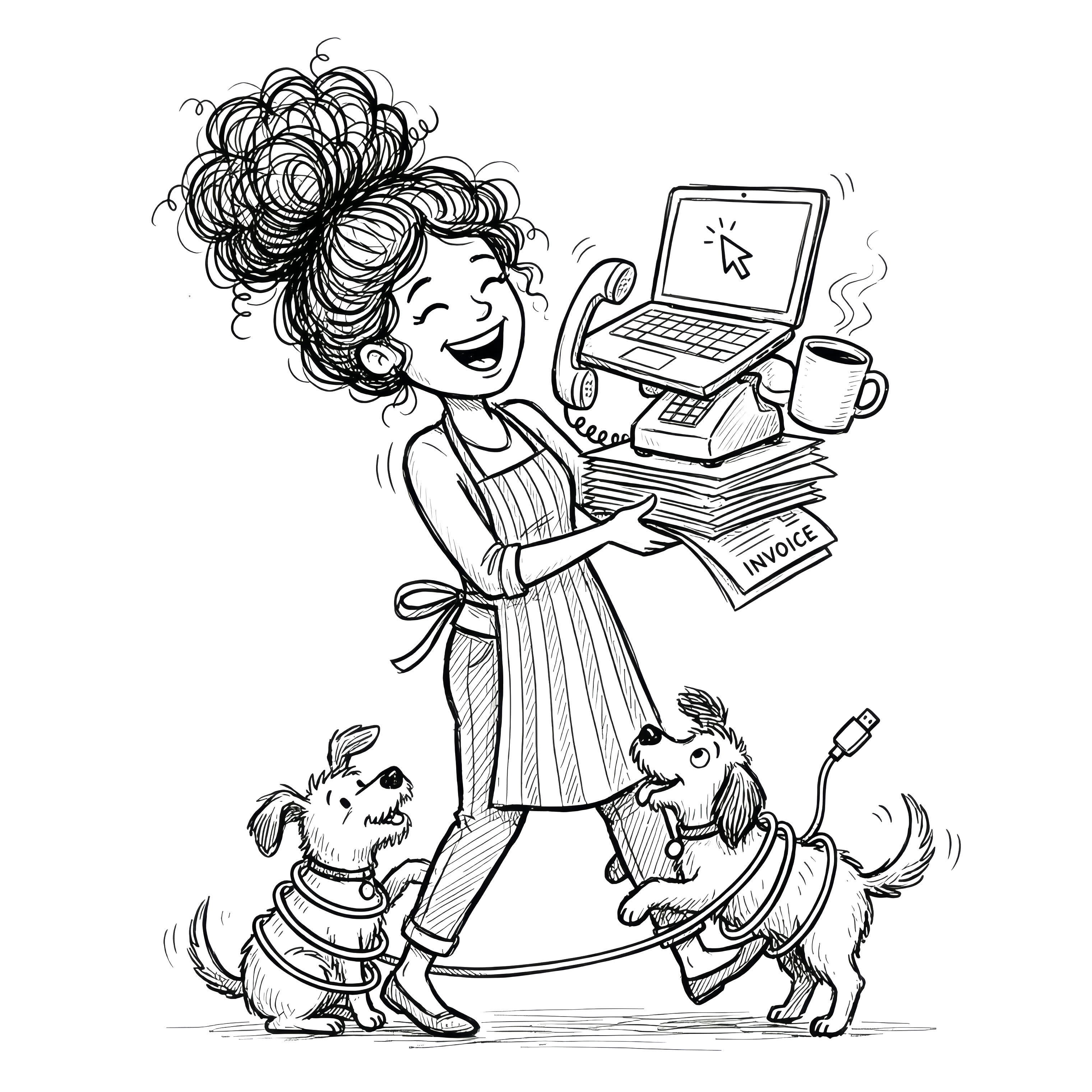
Your team knows what they're supposed to do, but somehow you're still checking that they did it. You're confirming schedules. Chasing updates. Answering questions. Reminding people to follow the process. Making sure the client was updated.

And when your people are out in the field, it gets even harder. You can't be everywhere. But somehow the business still expects you to know what's happening everywhere.

You have a CRM, but half the real information is still sitting in WhatsApp, email, spreadsheets, someone's notes or your head. You bought software to make things easier, but somehow you've ended up managing the software too.

Things are getting done, but you're never completely confident that everything is getting done. So you check. And remind. And follow up. And fix. And carry.

The business is growing, but instead of becoming less dependent on you, it seems to need you more. I understand that kind of business. And I don't think the answer is automatically another app.

Why I see it this way

The work has to work.

That's one of the reasons I don't believe operations is just about technology. A system isn't working simply because the automation fired or the CRM was configured correctly.

People need to know what they're responsible for. They need the information to do it. They need to know what happens next. Managers need visibility. The field needs to stay connected to the office. And the owner shouldn't have to become the human reminder system holding all of it together.

Tomi from behind, working on her laptop against an orange wall

Following the flow until it breaks.

That's the part of operations I care about. The people. The process. And then the technology that helps both work better. Because I believe technology should fit the business, not force the business to fit the technology.

That's what I build at TOMi: clearer operations, smarter systems, and businesses that can grow without everything depending on the owner.

How I work

I don't start with technology. I start with "why?"

Why does this person have to enter the same information twice? Why does the owner need to approve this? Why are we manually reminding someone every Friday? Why can nobody see where this client is in the process? Why are five tools doing pieces of one job? Why does this process exist at all?

Sometimes the solution is ridiculously simple. Remove a step. Change who owns something. Document what happens next. Connect two tools. Automate the repetitive part.

And sometimes the business has genuinely outgrown the tools available to it, and we need to build something better.

But I'm not interested in putting beautiful technology on top of a broken process. First, I want to understand how your business actually works. Then we make it work better.

That's what TOMi became

I find operational friction.

I look at how a business moves from enquiry to delivery to payment and everything in between. I find the places where information disappears, clients wait, team members get confused, owners become bottlenecks and revenue quietly leaks out. Then I help fix it.

I've helped businesses organise operations, improve client journeys, build internal systems, connect scattered processes and turn ideas that existed in an owner's head into something their team could actually follow.

And some of the work I'm proudest of has come from sitting with a business owner, listening to how they work and realising: "You shouldn't still have to do this."

I like solving difficult problems. I love building. I can disappear down a rabbit hole trying to figure out why something isn't working. But the technology itself isn't the point. The person on the other side of it is.

What I believe

A few things I won't budge on.

01

A good business should carry some of its own weight.

It shouldn't live entirely inside its founder's head. It shouldn't require constant rescuing. And growth shouldn't automatically mean more chaos.

02

Nothing for the sake of it.

Not more systems for the sake of systems. Not automation because AI is trendy. Not software because software looks impressive. I want to build businesses that work better for the people inside them.

03

The person on the other side is the point.

There's an owner who would like to finish work without wondering what they forgot. A team member who wants to know exactly what they're responsible for. A client who simply wants a smooth experience. And often a family whose livelihood depends on that business continuing to work. I don't take that lightly.

04

Give me the pieces.

Let me find the pattern. Then let's make the whole thing make sense.

We may be a good fit if...

You're tired of being the person holding every piece together.

You've built a real business. You know something isn't working behind the scenes, even if you can't quite identify where the problem starts. And you're willing to look honestly at how your business operates instead of adding another quick fix on top of it.

If you're only looking for another tool, I'm probably not the right person.

But if you want someone to step into the mess with you, understand how all the pieces connect and help you build a better way to operate... That's exactly what I do.

Enough about me. Let's talk about your mess.

45 minutes. You show me how things actually work. You leave knowing what to fix first.

Get your business together

45 minutes · Zoom · £150 · your next moves within 48 hours